Maintenance Methods For Titanium Alloy Marine Oil And Gas Equipment
Titanium alloys are widely used in marine oil and gas equipment due to their high strength, corrosion resistance, and lightweight properties. The marine environment is complex and variable, and equipment is exposed to high pressure, high salinity, and corrosive media for extended periods. Improper maintenance can lead to performance degradation or malfunctions even in titanium alloy equipment. Scientific and systematic maintenance methods can effectively extend equipment lifespan and ensure safe and efficient oil and gas production.
Daily Inspection and Monitoring
Maintenance of titanium alloy equipment should be based on daily inspections, including the surface condition of the equipment, connection points, and sealing performance. Regularly check for scratches, dents, or localized corrosion, especially at welded joints and bolted connections. Simultaneously, monitor the temperature, pressure, and flow parameters of the equipment during operation to promptly detect abnormal fluctuations. A combination of data monitoring and visual inspection can help identify potential problems early, preventing minor malfunctions from escalating into major accidents.
Cleaning and Protective Measures
In the marine environment, salt spray, silt, and biofouling can affect titanium alloy equipment. Regular cleaning of the equipment to remove deposits and impurities helps maintain the integrity of the surface oxide film. For equipment that has been out of service for extended periods, protective coatings or coverings can be applied to reduce the corrosive effects of seawater and salt spray on the materials. During maintenance, mild cleaning agents should be used to avoid damaging the protective layer on the titanium alloy surface, while also paying attention to operational safety and environmental protection.
Lubrication and Maintenance of Moving Parts
Titanium alloys are widely used in valves, pumps, and other mechanical components. Their moving parts require regular lubrication and inspection. Select corrosion-resistant lubricants suitable for the marine environment to ensure good lubrication of friction points and reduce the risk of wear and fatigue damage. For critical moving parts, lubrication and replacement cycles should be established based on usage frequency to ensure long-term stable operation of the equipment.
Maintenance of Welded Joints and Bolted Connections
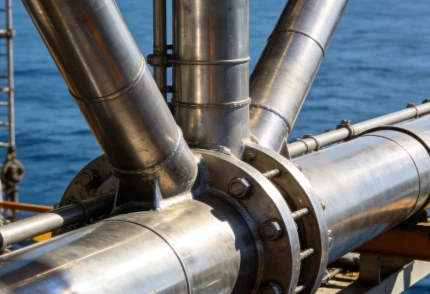
Titanium alloy marine equipment typically uses welded and bolted connections. Welds and connection areas are stress concentration and corrosion-sensitive areas. Regularly inspect the integrity of welds and check for loose or corroded bolts. If necessary, non-destructive testing, such as ultrasonic testing or magnetic particle testing, can be performed to ensure the joints are secure and reliable. Bolted connections should be coated with corrosion inhibitors and tightened to standard torque to prevent leakage or detachment of the equipment in the marine environment.
Operating Environment and Maintenance
Titanium alloy equipment operates in high-pressure, high-temperature, or highly corrosive environments. Strict adherence to design parameters is crucial to prevent damage from overpressure, overtemperature, or media impact. Operating procedures and emergency plans must be established, and operators must be trained to ensure the equipment remains in optimal condition during offshore oil and gas operations. Proper operation and environmental adaptation can significantly reduce equipment failure rates and improve safety and economy.
Long-Term Maintenance and Periodic Assessment
Long-term maintenance of titanium alloy offshore oil and gas equipment requires establishing equipment files and a periodic assessment mechanism. Record equipment operating time, maintenance records, and failure scenarios, and analyze service life and performance trends. Based on assessment results, adjust maintenance strategies and cycles, and replace or upgrade components as necessary to ensure the equipment is always in optimal operating condition.
Scientific maintenance methods are essential for titanium alloy offshore oil and gas equipment. Through daily inspections, cleaning and protection, maintenance of moving parts, weld joint maintenance, operational management, and long-term assessments, equipment lifespan can be extended, failure risks reduced, and the safe and efficient operation of offshore oil and gas production ensured. Proper maintenance and management will fully leverage the advantages of titanium alloy materials, enabling the equipment to operate stably in complex marine environments for extended periods.