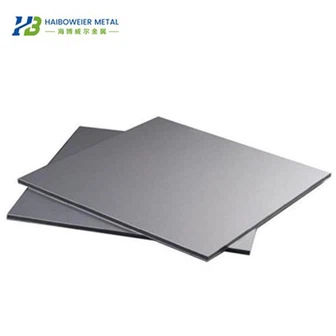
What Is Black Titanium? Black Titanium Stainless Steel Pictures
Black titanium is an inorganic composite pigment with high blackness and good physical and chemical stability. It is usually obtained by reducing titanium dioxide and has a mixed powder structure of sodium chloride cubic crystal and rutile tetragonal crystal. Black titanium has high heat resistance, acid and alkali resistance, high hiding power and good dispersibility, and is an environmentally friendly and non-toxic material.

I. Black titanium is not a titanium alloy
Black titanium is a stainless steel material. It uses a special surface treatment process such as electroplating or water plating to make the stainless steel surface appear black. This treatment method not only enhances the decorative effect of stainless steel, but also improves its corrosion resistance, wear resistance and resistance to ultraviolet radiation.
The material of black titanium stainless steel plate usually includes different types of stainless steel such as 201, 304, 316, etc., with a thickness ranging from 0.28mm to 5mm. In terms of physical properties, the density of black titanium stainless steel is about 7.92 g/cm³, the elastic modulus is 200 GPa, the tensile strength is 520 MPa, the elongation is 40%, and the hardness is 207HBW. In terms of chemical composition, it contains a certain proportion of elements such as carbon, silicon, manganese, phosphorus, sulfur, chromium, nickel and molybdenum.
The types of black titanium stainless steel include black titanium brushed, black titanium frosted and black titanium mirror, etc. These types may use different surface treatment processes during processing, such as mirror polishing, brushed sandblasting or etching. Among them, the black titanium mirror stainless steel plate is made by grinding and polishing on the ordinary stainless steel plate, and then titanium plating to form a corrosion-resistant black titanium layer on its surface.
The production process of black titanium stainless steel mainly includes electroplating and water plating. The color of electroplating is gray, while the color of water plating is relatively black. If 304 or 316 stainless steel plate is used for water plating of black titanium, the color can be adjusted to black or blue according to customer requirements. The black titanium stainless steel plate is relatively simple in the processing process, the color is stable, and there are rarely serious color difference problems. It has strong decorative properties. As a versatile color, black can be applied to a variety of scenes to create a high-end and atmospheric decorative effect.
II. Is there black titanium?
1. Titanium Suboxide
Titanium Suboxide is a highly active, pure black inorganic new energy functional material, and its color is black.
In terms of chemical structure, it is between titanium dioxide (TiO2) and metallic titanium. It has a variety of forms, including polycrystalline and crystalline forms, the most common of which are anatase and rutile. The structure of anatase-type titanium suboxide is a tetragonal system, and the structure of rutile-type titanium suboxide is a hexagonal system.
Titanium suboxide is an environmentally friendly and non-toxic material that meets food-grade safety standards and does not cause damage to the skin, meeting the development needs of a low-carbon economy. Titanium suboxide has good electrical conductivity, especially the Ti4O7 phase, whose single crystal conductivity is as high as 1500S/cm³. In addition, titanium suboxide also has high thermal stability and good dispersibility, and can be evenly dispersed in water and resin.
The black characteristics of titanium suboxide make it widely used in photocatalysts, battery electrode materials, LED black matrix materials and other fields. Due to its unique physical and chemical properties, titanium dioxide can be used as a cathode to replace graphite in the battery field to reduce the capacitance attenuation caused by the charge and discharge cycle. At the same time, it also shows good performance in the chemical industry, electrometallurgy, electroplating, environmental protection industry and water treatment.

1> Titanium dioxide characteristics
① Physical properties: It has good electrical conductivity at room temperature, especially Ti4O7, whose single crystal conductivity is 1500Scm-1. The volume density is 3.15 g/cm³―3.18g/cm³.
② Chemical properties: It has high chemical stability and corrosion resistance. In 50°C and 42% concentration H2SO4, the static corrosion rate is only 0.019g/m²/day. It has good electrochemical properties. At room temperature, the working current is controlled at 5-20mA/cm². The material can be used as both the positive and negative electrodes for hydrogen and oxygen evolution reactions, and the hydrogen and oxygen evolution overpotential is very high.
③ Thermal stability: The temperature resistance of titanium oxide in oxidizing atmosphere is less than 600℃, and the powder particle size is ≤1.0μm.
④ Environmental protection and non-toxicity: It meets food-grade safety standards, will not cause damage to the skin, and meets the development needs of a low-carbon economy.
2> Application fields of titanium oxide
① Battery field: As a cathode substitute for graphite, it can reduce the capacitance decay caused by the charge and discharge cycle; it is used as electrodes and bipolar materials for fuel cells, zinc-air batteries and flow batteries.
② Chemical industry: Due to its excellent chemical stability and conductivity, it can be used in the chlor-alkali industry, chlorate manufacturing, dichromic acid preparation and organic electrosynthesis.
③ Electrometallurgy field: As an electrode for electrolytic zinc deposition, metal recovery, electrolytic manganese oxide, metal foil production and recycling of printed circuit board etching solution.
④ Electroplating field: Because the electrolyte contains highly corrosive substances such as fluoride ions, the titanium oxide electrode has a high oxygen evolution overpotential, strong corrosion resistance, wear resistance, and stable electrode size.
⑤ Environmental protection industry and water treatment field: widely used in electrocatalytic degradation of organic pollutants and landfill leachate, electrocatalytic treatment of phenol wastewater, printing and dyeing wastewater treatment, oilfield wastewater treatment, hospital sewage treatment, electrolysis of seawater for hydrogen production, seawater desalination, electrolysis of water disinfection and ozone production.
⑥ Cathodic protection field: used for corrosion protection of oil storage tanks, ships, docks, bridges and reinforced concrete, and cathodic protection of soil.
There are various methods for preparing titanium dioxide, including sol-gel method, hydrothermal method, high-temperature oxidation method, etc.
2. Black titanium dioxide
Traditional titanium dioxide is a white pigment widely used in coatings, plastics, papermaking and other industries. However, titanium dioxide can be made black through special chemical treatments such as hydrogenation, chemical reduction, anodizing-annealing and other methods.
Compared with traditional white titanium dioxide, this black titanium dioxide exhibits significantly enhanced light absorption and electron transport capabilities, has improved optical absorption properties, and can absorb light from the ultraviolet to infrared regions of the solar spectrum. This is mainly due to its special core-shell structure, in which the outer shell is an oxygen-deficient amorphous layer and the inner core is the original crystalline phase.

Titanium dioxide with this structure exhibits higher activity in photocatalytic performance, especially in the absorption capacity of visible light and near-infrared light regions, which is of great significance for improving the utilization efficiency of solar energy. This makes it have potential application value in the fields of photocatalysis, solar cells, solar thermal collection, etc., and provides a new research direction for the application potential of titanium dioxide in the energy field.
① Photohydrogen production: Black TiO2 has been widely studied for photocatalytic water decomposition to produce hydrogen because of its ability to absorb visible light and even near-infrared light. For example, Ti3+ ions and oxygen vacancies produced by hydrogenation can significantly enhance the absorption of visible light, charge carrier capture ability and charge separation ability, thereby improving the efficiency of photocatalytic hydrogen production.
② Photoelectrochemical hydrogen production: The black TiO2 nanotube array prepared by electrochemical reduction method shows enhanced photoelectrochemical water splitting performance, which can effectively improve the efficiency of photoelectrochemical hydrogen production.
③ Photodegradation of organic matter: Black TiO2 has extremely high photodegradation efficiency for a variety of organic pollutants such as phenol, active black 5, rhodamine B, methylene blue, etc., and is used to remove environmental pollutants.
④ Photochemical sensors: Black TiO2 is also used in the development of photochemical sensors due to its excellent light absorption performance, which is used to detect organic pollutants in the environment.
⑤ Cancer photothermal therapy: Polyethylene glycol-coated hydrogenated black TiO2 has been studied for cancer diagnosis and treatment, showing good photothermal therapy effects.
⑥ Other energy and environmental applications: Black TiO2 has also been studied for other energy conversion and environmental remediation fields, such as photocatalytic CO2 reduction, antibacterial disinfection, etc.
Research progress on black titanium dioxide shows that its light absorption performance and photocatalytic activity can be regulated through different synthesis methods and defect engineering, thereby achieving a wider range of applications in the field of photocatalysis. Although certain research progress has been made, the performance of black TiO2 is still far from the actual production requirements, and some key photocatalytic mechanisms are still unclear. Further research is needed to improve its photocatalytic efficiency and photoquantum efficiency.