


Why Are Titanium Plates Essential For Aircraft Corrosion-Resistant Structures?
In modern aerospace manufacturing, aircraft structures must not only be strong and lightweight but also maintain long-term stability in complex and variable environments. During service, aircraft are exposed to humid air, salt spray, and large temperature fluctuations at high altitudes, all of which accelerate material corrosion and compromise structural safety and lifespan. Therefore, corrosion resistance has become a key criterion in aircraft structural design. Titanium plates, with their excellent corrosion resistance, stable mechanical properties, and adaptability, have gradually become an indispensable material in corrosion-resistant aircraft structures, providing more reliable safety assurance for aviation equipment.
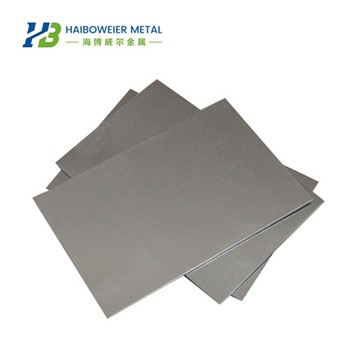
Outstanding Corrosion Resistance for Complex Flight Environments
Aircraft are exposed to multiple corrosion factors during operation, requiring materials with superior protective capabilities:
- Titanium plates remain stable in humid and salt-spray environments, resisting corrosion
- Their surfaces form a dense oxide layer that effectively isolates external corrosive agents
- Excellent tolerance to various chemical substances, adapting to complex environmental conditions
- Reduces structural corrosion risks, extending the service life of critical aircraft components
Superior corrosion resistance enables aircraft to operate safely in harsh environments while minimizing potential hazards from material degradation.
Reliable Structural Performance Enhances Overall Safety
Corrosion-resistant structures must maintain strong mechanical performance as well:
- Titanium plates offer high strength to withstand various loads during flight
- Resist fatigue damage over long-term use, maintaining structural integrity
- Excellent impact resistance to cope with airflow changes and external shocks
- Improves overall structural stability, ensuring flight safety
Stable structural performance provides reliable support, allowing aircraft to operate safely under complex flight conditions.
Lightweight Advantage Optimizes Flight Performance
Weight control in aerospace design directly affects fuel efficiency and flight performance:
- Titanium plates have low density, reducing overall airframe weight
- Improves fuel efficiency, extending flight range
- Enhances aircraft maneuverability and flight stability
- Offers greater flexibility in structural design, enabling performance optimization
Lightweight structures not only save energy but also enhance the aircraft's overall operational efficiency and capabilities.
Long-Term Stability Reduces Maintenance and Operating Costs
Aircraft require materials with durability and stability for long-term service:
- Titanium plates resist corrosion and fatigue, extending structural service life
- Maintain stable performance without significant degradation from environmental changes
- Reduce maintenance and inspection frequency, lowering operational costs
- Improve aircraft availability, ensuring efficient transport or mission execution
Long-term stability provides a continuous and reliable operational foundation, keeping aircraft performing efficiently throughout their service life.
As the aerospace industry continues to advance toward higher performance and reliability, material selection for aircraft structures becomes increasingly critical. Titanium plates, with their combined advantages in corrosion resistance, structural strength, and lightweight properties, have become a key material for corrosion-resistant aircraft structures. Their application not only enhances safety and lifespan but also provides strong support for stable operation in complex environments, ensuring that aircraft continue to perform reliably in future aerospace developments.


