


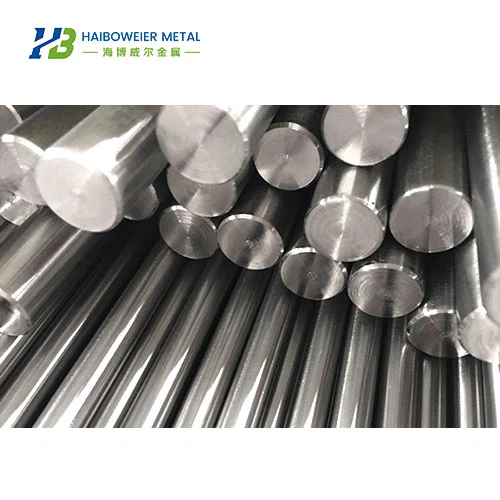
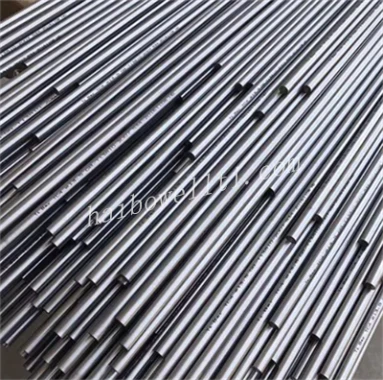
Nickel Titanium Shape Memory Alloy Rod
Name: NiTi Shape Memory Alloy Rod
Material: nickel titanium
Implementation standard: ASTM F2063
Specifications: Customer’s actual application dimensions
Packaging: sponge pad wrapped and wooden box
Features : Shape memory alloy / superelasticity
Grade : nickel titanium, nickel iron, nickel copper, nickel niobium, nickel chromium, etc.
Surface: Order requirements
Product Introduction
Shape memory alloy (SMA) is a material that can return to its original shape after deformation. One of the most outstanding properties of nickel-titanium shape memory alloy rods is its shape memory effect, also known as superelasticity. This means that when the alloy is bent or twisted, it can return to its original, intended shape. Among all types of SMA, titanium-based SMA (also known as TiNi alloy or Nitinol) is of interest due to its unique combination of mechanical properties and shape memory effect . TiNi alloy is an intermetallic compound composed of titanium and nickel. They exhibit two key properties: shape memory effect (SME) and superelasticity (SE). SME refers to the ability of a material to return to its original shape after deformation at a certain temperature. SE features a large amount of reversible deformation without permanent damage.
Product reference parameters:
|
name |
ASTM F2063 Nitinol Shape Memory Alloy Rod |
|
aspect |
Diameter≥4.0mm |
|
density |
6.45 g/cm3 |
|
melting point |
1310℃ |
|
feature |
Super elastic/shape memory alloy |
|
temperature |
-15℃~100℃ |
|
grade |
Nickel titanium, nickel copper, nickel iron, nickel chromium, nickel niobium, etc. |
|
standard |
ASTM F2063-2012 |
|
technology |
The mirror surface processed by the hot rolling machine is very bright |
|
Advantages: Smooth surface, high dimensional accuracy, good plasticity, excellent superelasticity after treatment, medical use for heart stents, and industrial use in bridge construction and other industries. |
|
ASTM F2063 NiTi Memory Stick Advantages :
Shape memory effect: This is the most remarkable property. No matter how much deformation an alloy undergoes, it will return to its preset shape once it is subjected to one of the appropriate triggers, usually a change in temperature.
Super elasticity: NiTi alloy can deform greatly after being stressed, but compared with ordinary metals, it has a higher elastic limit and can return to its original shape to a greater extent.
Temperature intensity: Shape memory effects are often associated with temperature changes. By adjusting the composition of the alloy, shape changes can occur within a specific temperature range.
Corrosion resistance: Nitinol alloys generally have good corrosion resistance, which allows them to be used stably for a long time in some special environments.
High strain resistance: The alloy will produce some energy dissipation when deforming, showing equal strain resistance, which is beneficial in some applications.
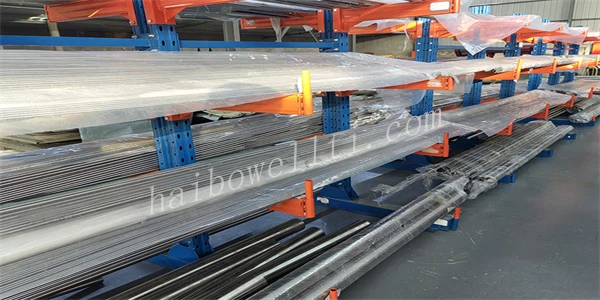
NiTi shape memory alloy rod product performance:
1
Tensile strength: The tensile strength of ASTM F2063 nickel-titanium alloy rod is as high as 1200 MPa, making it highly resistant to damage.
2
Fatigue resistance: This product still exhibits excellent fatigue resistance even after experiencing a large number of deformation cycles.
3
High precision: Nickel-titanium memory alloy rods can be processed into high-precision parts to ensure accurate and reliable performance.
What are the production methods of TiNi alloy ?

Powder metallurgy has become the most common method for producing titanium-nickel alloys due to its high output, low cost and production flexibility. This method presses TiNi powder into the desired shape and then sinters it under high temperature and pressure to form a dense material with good mechanical properties.
Its main advantages include:
Precision control: The precision of the shape memory effect makes this alloy very useful in applications that require precise control of shape.
Lightweight design: Nickel-titanium alloy is suitable for areas that need to reduce weight, such as aerospace.
Reliability: Due to their superelasticity and corrosion resistance, this type of alloy usually exhibits extremely high reliability and is suitable for some scenarios that require strict material performance.
Nickel titanium shape memory alloy rod applications :
Nitinol rods are widely used in various fields, including medical devices, aerospace engineering, electronics , automobiles, and robotics . For example, it is used to make retractable brackets, temperature-sensitive switches and various deformable mechanical parts.
1. Medical industry: orthodontic guide wires, stents, cardiovascular implants.
2. Aerospace industry: actuators, sensors and control systems.
3. Engineering industry: structural parts, damping devices, connectors.
Hot Tags: nickel titanium shape memory alloy rod, China nickel titanium shape memory alloy rod manufacturers, suppliers, factory, ASTMF67 Titanium Rod, Gr23 Titanium Bar, Rolled Titanium Bar, ASTM B348 Titanium Rod, AMS 4928 Titanium Bar, Forged Titanium Bar
You Might Also Like


Send Inquiry
