Why Choose Titanium Alloys For Deep-Sea Engineering Equipment?
Deep-sea engineering equipment needs to operate for extended periods in extreme environments, enduring complex conditions such as high pressure, low temperatures, and strong corrosion. Material selection directly impacts the safety and lifespan of the equipment. Due to its superior properties, titanium alloys have gradually become a crucial material in deep-sea equipment manufacturing, playing an irreplaceable role in several key structures.
Stringent Requirements of the Deep-Sea Environment on Material Performance
The deep-sea environment is characterized by high hydrostatic pressure, low temperatures, and high salinity, factors that continuously affect materials. Ordinary metals are prone to corrosion during long-term immersion and may experience deformation or fatigue damage under high pressure. Material failure not only makes repairs difficult but also poses safety hazards. Therefore, deep-sea engineering demands materials with high strength, corrosion resistance, and high stability.
The Corrosion Resistance and Oxidation Resistance Advantages of Titanium Alloys
Titanium alloys can form a dense and stable oxide film in seawater. This protective structure effectively isolates corrosive media, allowing the material to maintain good condition during long-term use. Even in complex marine environments, it is not prone to rust or performance degradation. Compared to traditional materials that require additional protective measures, titanium alloys possess strong corrosion resistance, helping to reduce maintenance costs.
The Combined Advantages of High Strength and Lightweight Design
Titanium alloys have high specific strength, allowing for weight reduction while maintaining good load-bearing capacity. For deep-sea equipment, weight reduction reduces structural burden and improves overall stability. In complex operating conditions, lightweight structures facilitate efficient operation and also aid in equipment installation and transportation.
Key Application Points of Titanium Alloys in Deep-Sea Equipment
In practical applications, the performance of titanium alloys can be fully utilized through reasonable design:
- Optimize structural stress distribution: Improve overall stability and reduce stress concentration.
- Control material thickness and weight: Achieve lightweight design while ensuring strength.
- Improve surface finish: Enhance corrosion and wear resistance.
- Appropriately apply to key components: Improve the reliability of core equipment areas.
- Strengthen inspection and maintenance management: Ensure long-term operational safety.
These measures can effectively improve equipment performance.
Application Prospects in Deep-Sea Engineering
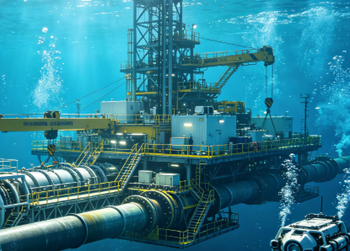
With the increasing demand for deep-sea resource development, the need for high-performance materials is also continuously rising. The application of titanium alloys in deep-sea mining equipment, subsea pipelines, and underwater robots is gradually expanding. As manufacturing processes are continuously optimized, cost control capabilities are gradually improving, and they will be widely used in more deep-sea engineering projects in the future.
Titanium alloys, with their excellent corrosion resistance, high strength, and lightweight properties, demonstrate significant value in deep-sea engineering equipment. Through rational design and application, equipment reliability and service life can be significantly improved, providing stable assurance for deep-sea development.