Applications Of Titanium Alloys in Marine Infrastructure Construction
Marine infrastructure construction includes offshore platforms, subsea pipelines, port structures, and offshore wind power equipment. These projects operate in high-salt, high-humidity, and highly corrosive environments for extended periods, placing extremely high demands on material performance. Traditional steel is easily corroded in marine environments, requiring frequent maintenance. Titanium alloys, with their superior properties, are increasingly widely used in marine engineering, providing reliable support for improving structural durability and safety.
Performance Advantages of Titanium Alloys in Marine Environments
Titanium alloys can form a stable oxide protective layer in seawater, effectively preventing further corrosion. This self-protective ability allows them to maintain good performance even under long-term immersion conditions. Compared to ordinary metals, titanium alloys do not require complex anti-corrosion coatings to maintain structural stability. Their strong oxidation resistance and high durability in complex climates and marine environments help reduce maintenance costs.
Typical Application Scenarios in Marine Infrastructure
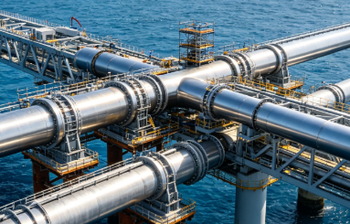
In practical engineering, titanium alloys are widely used in several key structures, such as offshore platform support structures, subsea pipelines, and critical connecting components in port facilities. These components need to withstand seawater erosion and mechanical loads, and titanium alloys can provide stable performance. In offshore wind power equipment, the use of titanium alloys in key components can improve overall durability, enabling the equipment to operate stably for a long time in harsh environments.
Application Requirements of Titanium Alloys in Structural Design
In marine engineering structural design, the use of titanium alloys needs to be optimized in conjunction with specific working conditions. Due to its relatively low elastic modulus, the stress areas need to be reasonably allocated during design to avoid local stress concentration. The structural thickness and shape need to be calculated and optimized to meet strength requirements while maintaining the advantage of lightweight design. Through meticulous design, the material properties can be fully utilized.
Application Strategies to Improve Engineering Reliability
In marine infrastructure construction, the application effect of titanium alloys can be improved in the following ways:
- Optimize the structural stress layout: improve overall stability and reduce fatigue risk.
- Improve surface processing and treatment quality: enhance corrosion resistance and wear resistance.
- Rationally select key parts for use: leverage the material's advantages in the core structure.
- Control installation accuracy: ensure stable and reliable structural connections.
- Establish a long-term monitoring mechanism: promptly identify potential problems and implement maintenance.
These strategies can significantly improve the service life of engineering projects.
Application Prospects and Development Trends
With the continuous advancement of marine resource development, the demand for high-performance materials continues to grow. The application scope of titanium alloys in marine infrastructure is gradually expanding, especially in deep-sea engineering and high-end equipment fields. With continuous advancements in manufacturing technology, its cost is gradually being optimized, and it will be applied in more engineering projects in the future. Its high durability and low maintenance requirements give it a significant advantage in long-term projects.
Titanium alloys demonstrate good application value in marine infrastructure construction. Through reasonable design and optimized application, structural stability and service life can be effectively improved. With technological development, its role in marine engineering will be further enhanced.