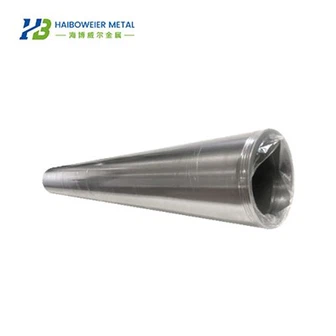
Are Titanium Tubes Safe for Medical Implants?
In today's rapidly advancing medical technology landscape, implants have become crucial for many patients to regain their health. From fracture repair to joint replacement, from dental implants to cardiovascular stents, the choice of implant directly impacts surgical success rates and patient recovery quality. Among numerous materials, titanium tubing, with its superior performance and excellent safety, has gradually become a "star material" in the medical implant field.

Biocompatibility: The Natural Advantage of Titanium Tubing
The primary reason for titanium tubing's brilliance in the medical field lies in its exceptional biocompatibility. Titanium is an inert metal that undergoes virtually no chemical reaction within the human body, meaning it does not produce harmful substances with bodily fluids or tissues. When a titanium tubing is implanted, a dense titanium oxide film quickly forms on its surface. This film acts as a natural "protective shield," not only preventing the release of metal ions but also reducing the attack from the immune system, thus significantly lowering the risk of rejection. Statistics show that the rejection rate of titanium orthopedic implants within 10 years is less than 0.2%, far lower than that of stainless steel and cobalt-chromium alloys. This data fully demonstrates the superior biocompatibility of titanium tubing.
Mechanical Properties: A "Golden Ratio" Matching Human Bones
Besides biocompatibility, the mechanical properties of titanium tubing are another key reason for its popularity. The elastic modulus of titanium alloys is similar to that of human bones, meaning it provides sufficient support strength while reducing stress shielding effects. Stress shielding effects occur when the elastic modulus of the implant is much higher than that of the bone, causing the bone to gradually shrink due to insufficient stress stimulation, affecting the long-term stability of the implant. The advent of titanium tubing precisely solves this problem. Like a "golden partner" to human bones, it can withstand the pressure of daily activities while promoting healthy bone growth, leading to more lasting recovery results for patients.
Corrosion Resistance and Antibacterial Properties: Dual Protection for Health
In the moist environment of bodily fluids, the corrosion resistance of materials is crucial. Titanium tubing, with its excellent corrosion resistance, remains stable within the human body for a long time, resistant to corrosion or degradation. This not only extends the lifespan of the implant but also reduces the risk of complications caused by material corrosion. Furthermore, with the continuous advancement of medical technology, researchers have also endowed titanium tubing with antibacterial properties through surface modification techniques. For example, constructing zinc-containing nanostructures on the surface of titanium tubes using the sol-gel method, or loading antibacterial elements such as selenium onto titanium dioxide nanotube arrays, effectively inhibits bacterial adhesion and proliferation on the implant surface, further reducing the risk of infection.
Clinical Applications: Wide Coverage, Significant Results
Titanium tubes have an extremely wide range of applications in the medical field. In orthopedic surgery, titanium tubes are used to manufacture artificial joints, bone trauma products, and spinal fixation systems, bringing freedom of movement to countless patients. In dentistry, titanium tubes, as the core material for dental implants, provide stable support and an aesthetically pleasing appearance, allowing patients to regain their confident smiles. In the cardiovascular field, titanium tube vascular stents safeguard the heart, opening narrowed blood vessels and ensuring smooth blood flow. These clinical application cases fully demonstrate the superior performance and wide applicability of titanium tubes in the field of medical implantation.
Titanium Tubes: The Ideal Choice for Medical Implantation
From biocompatibility to mechanical properties, from corrosion resistance to antibacterial capabilities, titanium tubes, with their comprehensive advantages, have become the ideal choice in the field of medical implantation. It not only brings safer and more lasting recovery results to patients, but also drives continuous progress and innovation in medical technology. In the future, with continued investment in scientific research and ongoing technological innovation, the application prospects of titanium tubing in the field of medical implantation will be even broader. Choosing titanium tubing is choosing a commitment and guarantee for health. Let us look forward to titanium tubing creating more miracles in the medical field and bringing good news to more patients!