


What are the characteristics of nickel titanium alloy?
Nitinol, also known as Nitinol, is a unique material that exhibits exciting properties due to its phase change behavior. Nitinol is a binary alloy composed of nickel and titanium. The composition of the alloy contains almost equal amounts of nickel and titanium, which gives it unique shape memory and superelastic properties. Nitinol's phase transformation mechanism results from the relationship between its martensite and austenite crystal structures. There are two different crystal structure phases due to changes in temperature and mechanical pressure, namely the austenite phase and the martensite phase. When an alloy is heated above a specific temperature called the transformation temperature, it transforms from the low-temperature martensite phase to the high-temperature austenite phase. Nitinol can also undergo a reverse transformation, which results in shape recovery when cooled below the transformation temperature.
The phase transformation sequence of nickel-titanium alloy when cooled is parent phase (austenite phase) - R phase - martensite phase. The R phase is rhombus-shaped, and austenite is in a state when the temperature is higher (greater than the temperature at which austenite begins) or when the load is removed (external force removes Deactivation). It is cubic and hard. The shape is relatively stable. The martensite phase is a state when the temperature is relatively low (less than Mf: the temperature at which martensite ends) or when it is loaded (activated by external force). It is hexagonal, ductile, repeatable, less stable, and easier to Deformation.
1. Shape memory effect
One of the key properties of Nitinol is its shape memory effect, which refers to its ability to remember its original shape and return to its original shape after bending and deformation. This means that when an alloy deforms at low temperatures (usually below the martensitic transformation temperature), it can recover its original shape when heated above the martensitic transformation temperature. This property makes it a valuable material for a variety of applications including medical implants, aerospace and the automotive industry.
2. Excellent super elasticity
Nitinol also has excellent superelasticity, which refers to the ability to return to its original shape when bent or stretched without permanent deformation. That is, the ability to withstand significant deformation and fully recover after stress relief. This allows the alloy to exhibit good elasticity under high strains, a property that makes it suitable for use in robots, machinery and instruments that require high elasticity and stability. Commonly used in fields such as spring elements and anti-shock devices.
⑴Principle:
The superelasticity of nickel-titanium alloys is caused by the martensitic phase transformation present in its crystal structure. At low temperatures, nickel-titanium alloys are in the martensitic phase, and reversible elastic deformation can occur at this time. When an alloy is stretched or bent, a phase change occurs from martensite to austenite. During this process, the alloy bends or stretches, but once the external load is removed, the alloy returns to its original martensitic phase, achieving a superelastic effect without permanent deformation.
⑵Strain range:
The superelasticity of nickel-titanium alloy has a large strain range, usually up to 8% to more than 10%. This makes it useful in applications that require large deformations and require the material to maintain its original shape, such as for the manufacture of spring elements, anti-vibration devices, etc.
No plastic deformation: Superelasticity allows nickel-titanium alloys to elastically deform under large strains without causing permanent deformation. This is unlike traditional metallic materials, which undergo permanent plastic deformation when their elastic limit is exceeded.
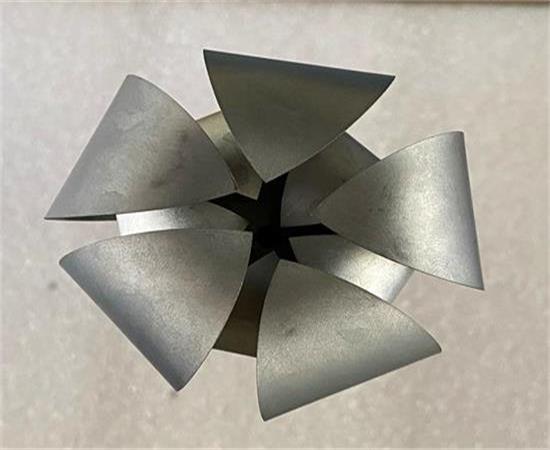
⑶Load-unload loop:
NiTi alloys exhibit significant loop effects during loading-unloading cycles. During the loading process, the alloy showed a relatively stable stress-strain relationship, while during the unloading process, the stress dropped rapidly, forming an obvious loop. This is due to the superelastic effect caused by the phase transition.
⑷Temperature effect:
Superelastic properties are greatly affected by temperature. The phase transformation temperature of an alloy can be controlled by adjusting the alloy composition to meet the required operating temperature range in a specific application.
3.Physical compatibility:
Another unique property of Nitinol is its biocompatibility, which means it is compatible with body tissue, making it ideal for use in medical implants such as stents and orthodontic wires. Nitinol's non-toxic properties make it an ideal material for temporary and permanent implants, with successful applications in orthopedics, cardiovascular surgery and neurosurgery.
Nitinol is a unique and innovative material recognized for its exceptional properties such as shape memory, superelasticity and biocompatibility. These properties make it a versatile material that can be used in multiple industries. The superelasticity of nickel-titanium alloys is widely used in medical devices, aerospace, automotive industries and other fields, such as in the manufacture of heart stents, orthotics, shock-proof devices, etc.
Nitinol's phase change mechanism will continue to be studied, its application potential will be further expanded, and Nitinol's future application prospects are broad.


