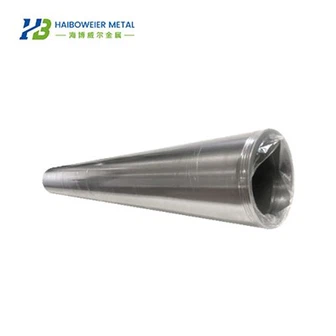
Characteristics of titanium tube heat exchanger
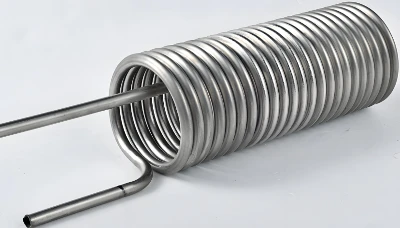
The titanium tube heat exchanger is made of titanium tube. As its main component, the titanium tube gives the heat exchanger a series of excellent properties, such as high strength, excellent corrosion resistance, non-magneticity and easy cleaning. These properties enable the titanium tube heat exchanger to operate stably for a long time in a variety of industrial environments, especially in occasions with corrosive media. In addition to titanium tubes, other parts of the titanium tube heat exchanger may also include components such as end covers, flanges, and seals. These components are usually made of materials that are compatible with titanium or corrosion-resistant to ensure the performance and life of the entire heat exchanger.
1. Working principle
The main working principle of the titanium tube heat exchanger is to exchange heat between two fluids through conduction and convection. In the titanium tube heat exchanger, there are usually two fluids, one is a high-temperature fluid (heat source) and the other is a low-temperature fluid (cold source). They contact each other through the inner and outer walls of the titanium tube, but do not mix directly, thereby realizing heat transfer.
2. Features
1) High strength: Titanium has high strength. The tensile strength of pure titanium can reach up to 180kg/mm², and the specific strength (ratio of tensile strength to density) of titanium alloy exceeds that of high-quality steel, which enables titanium tube heat exchangers to withstand greater pressure and load.
2) Excellent corrosion resistance: Titanium has good corrosion resistance in a variety of industrial solutions, including organic compounds, alkaline solutions, salt solutions and other media. Therefore, titanium tube heat exchangers can operate stably for a long time in corrosive environments.
3) Non-magnetic: Titanium is a non-magnetic material, so titanium tube heat exchangers can be used in pharmaceuticals and food, etc., where magnetic interference needs to be avoided.
4) Small size and large heat exchange capacity: Titanium tube heat exchangers have the characteristics of small size and light weight, and at the same time, large heat exchange capacity, which can meet various heat exchange needs.
5) Easy to clean: Titanium has a smooth surface, is not easy to produce dirt, and is easy to clean and maintain.
3. Application fields
Titanium tube heat exchangers are widely used in various fields due to their excellent performance, including:
1) Chemical industry: used for heat exchange of various corrosive media.
2) Petroleum: used for heating and cooling of oil products.
3) Ships: used for evaporation device heaters, air conditioning condensers, brine heaters and brine preheaters for distillation devices, engine jacket coolers, etc.
4) Seawater desalination: used for heating and cooling of seawater, as well as heat exchange during desalination.
5) Refrigeration: used for heat exchange in refrigeration systems.
6) Food: used for heat exchange during food processing to ensure food hygiene and safety.
4. Types and structures
Titanium tube heat exchangers have many types and structures, including fixed tube sheet type, floating head type, U-tube type, filler mesh type, etc. Different types of titanium tube heat exchangers are suitable for different working conditions and heat exchange requirements. Among them, the titanium plate heat exchanger is a new type of high-efficiency heat exchanger composed of a series of metal sheets with a certain corrugated shape. Thin rectangular channels are formed between various plates, and heat energy is exchanged through half sheets.
5. Maintenance and care
In order to ensure the long-term stable operation of the titanium tube heat exchanger, it is necessary to perform regular maintenance and care on it. This includes cleaning the inner and outer walls of the heat exchanger, inspecting and replacing damaged seals, and checking whether the fastening bolts of the heat exchanger are loose. In addition, attention should be paid to the concentration and operating temperature of the medium to avoid corrosion and damage to the titanium material.
Titanium tube heat exchangers have become an indispensable and important equipment in modern industry due to their excellent corrosion resistance, high strength, light weight, good heat transfer performance and wide application fields. From chemical, petroleum to pharmaceutical, food and other industries, titanium tube heat exchangers have demonstrated excellent performance and reliability, providing efficient and stable heat exchange solutions for various complex working conditions.