Classification and uses of titanium wire
Titanium wire is a common metal material with excellent performance and wide application fields. In this article, we will provide a detailed introduction to the classification of titanium wire and its uses in various fields.
Generally, titanium alloy wire and pure titanium wire are collectively referred to as titanium wire. Titanium wire is a broad term, and it has detailed classifications and different application areas under different classifications. Both pure titanium wire and titanium alloy wire have their unique advantages, mainly due to their material - titanium and titanium alloy. Titanium has superior properties, and the role of titanium and titanium products is also widely recognized. The most common titanium products in daily life are titanium rods, titanium plates, titanium standard parts, titanium dioxide, and titanium wire.
Classification, types, and applications of titanium wire:
- Titanium wire - Pure titanium wire, commonly known as TA1, TA2, TA3, TA4, or Gr1, Gr2, Gr3, Gr4 according to American standards.
- Titanium alloy wire - Generally referred to as TA11, TA9, TA10, TC4, or Gr7, Gr12, Gr5 according to American standards.
- Pure titanium eyeglass wire - Made of pure titanium material and used as raw material for eyeglass frames.
- Straight titanium wire - Unlike ordinary coiled wire, straight titanium wire is in a slender stick-like state without bending.
- Titanium welding wire - Used as welding material for titanium materials. Titanium welding wire is generally used when welding materials of the same grade.
- Titanium hanger wire - Used for bearing and hanging heavy objects.
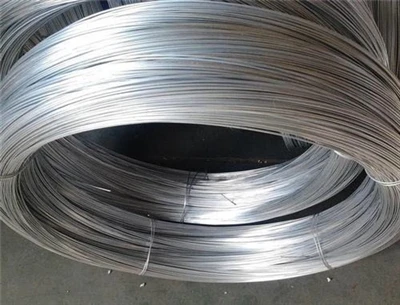
- Coiled titanium wire - Compared to straight titanium wire, coiled titanium wire is in a coiled state.
- Bright titanium wire - The surface of the titanium wire is bright and is used in scenarios that require a glossy surface without oxidation film.
- Medical titanium wire - Titanium wire in medical field, meets medical grade standards, can be implanted into the body without toxins and has strong biocompatibility without rejection reactions.
- Titanium-nickel alloy wire - An alloy of titanium and nickel, with various types, commonly used as a shape memory alloy material.
Main standards and grades of titanium wire:
The main standards are GB/T, GJB, AWS, ASTM, AMS, JIS. Common grades include TA0, TA1, TA2, TA3, TA4, TA5, TA6, TA7, TA9, TA10, TC1, TC2, TC3, TC4, TC6, TC11, GR1, GR2, GR3, GR5, Ti6AL4VELI, Ti6AL7Nb, Ti13Nb13Zr, Ti1533. The surface can be acid pickling or bright surface. Due to the small density, high strength, and good corrosion resistance of titanium wire, it is used in industries such as military, medical, sports equipment, glasses, earrings, electroplating hangers, and welding wires. So far, titanium is still in short supply, and its development potential is still very large. Titanium wire also has a wide range of applications in civil use.
As an important metal material, titanium wire has various classifications and wide application fields. By selecting the appropriate classification and application of titanium wire, different field requirements can be better met, promoting the development of related industries. I hope this article will help you understand the classification and uses of titanium wire.