


What are the properties and uses of titanium alloy pipes?
Titanium alloy pipes have become increasingly popular in the industrial field in recent years due to their excellent physical properties and wide range of applications. Titanium alloy pipes, as a high-strength, low-density material, have unique performance advantages, so they are widely used in aerospace, chemical, medical and other industries. Haiboweier editors will introduce the performance characteristics and main uses of titanium alloy pipes in detail in this article to help everyone better understand this important material.
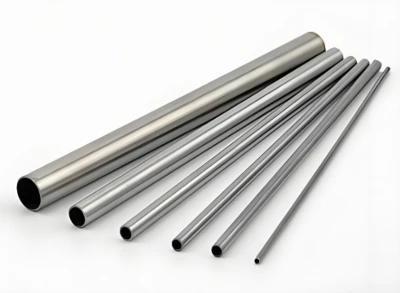
1. Performance of titanium alloy pipes
1) High strength: Titanium alloy has high specific strength (tensile strength/density), with tensile strength of 100~140kgf/mm², while density is only 60% of steel.
2) Good medium-temperature performance: The use temperature of titanium alloy pipes is several hundred degrees higher than that of aluminum alloys, and it can still maintain the required strength at medium temperatures, and can work for a long time at 450~500℃.
3) Excellent corrosion resistance: Titanium pipes have high corrosion resistance to chlorides, sulfides and ammonia. Titanium has higher corrosion resistance in seawater than aluminum alloys, stainless steel and nickel-based alloys. Titanium also has strong water impact resistance. In the atmosphere, a uniform and dense oxide film will immediately form on the titanium surface, which has the ability to resist erosion by various media. Generally, titanium has good corrosion resistance in oxidizing and neutral media, and its corrosion resistance in seawater, wet chlorine and chloride solutions is even better. However, in reducing media, such as hydrochloric acid solutions, titanium has poor corrosion resistance.
4) Good low-temperature performance: Titanium alloys with extremely low interstitial elements, such as TA7, can still maintain a certain plasticity at -253°C. Some titanium alloy tubes still have high impact strength even at ultra-low temperatures of -250°C, and can withstand high pressure and vibration.
5) Other physical properties: Titanium alloy tubes also have the characteristics of low elastic modulus, low thermal conductivity, and no ferromagnetism.
6) Good processing performance: Titanium alloy tubes have high mechanical properties, excellent stamping properties, and can be welded in various forms. The strength of the welded joint can reach 90% of the strength of the base metal, and the cutting performance is good.
2. Main uses of titanium alloy pipes
1) Aerospace field
Due to the high strength and low density of titanium alloy pipes, it has a wide range of applications in the aerospace field. For example, titanium alloy pipes are widely used in aircraft fuselages, engine parts, fuel pipes and other parts. These parts need to have high strength, corrosion resistance and lightweight characteristics, and the performance of titanium alloys just meets these needs.
2) Chemical industry
The corrosion resistance of titanium alloys makes it an ideal material for chemical equipment. In chemical reactors, heat exchangers, pipelines and other equipment, titanium alloy pipes can effectively resist the erosion of various corrosive media and extend the service life of equipment. In many strong acid and strong alkali environments, titanium alloy pipes can provide reliable protection.
3) Medical field
Titanium alloy pipes have also been widely used in the medical industry, especially in the production of medical implants. The excellent biocompatibility of titanium alloys makes it an ideal choice for orthopedics, dentistry and other medical implants. For example, titanium alloys can be used to make artificial joints, dental implants, etc., which can effectively avoid rejection reactions and promote tissue growth.
4) Marine engineering
Titanium alloy pipes are also widely used in marine engineering. Due to the strong corrosiveness of seawater, it is difficult for ordinary materials to adapt to the requirements of long-term work in the ocean. Titanium alloys have become an important material for offshore oil and gas development, submarine cable protection, and other marine structures due to their excellent corrosion resistance.
5) Automobile Industry
Titanium alloy pipes are also gradually entering the automotive industry, especially in the manufacture of high-performance vehicles. In engine exhaust systems, chassis components and other parts, titanium alloy pipes can effectively improve the performance and fuel efficiency of automobiles due to their high strength and light weight.
6) Sports Equipment
The high strength and lightweight characteristics of titanium alloys also make them widely used in high-end sports equipment. For example, titanium alloys are used to make sports equipment such as bicycle frames and golf clubs. These equipment need to be both light and strong, and titanium alloys are undoubtedly the ideal choice.
Titanium alloy pipes have become an indispensable material in many industries due to their unique performance advantages. Whether it is aerospace, chemical, medical, or marine engineering, automotive industry, titanium alloy pipes have shown great application potential. With the continuous development of technology, the scope and depth of application of titanium alloy pipes will continue to expand, providing more reliable material support for the development of various industries.
We at Haiboweier offer a variety of titanium products, including but not limited to forged titanium metal products such as titanium rods, titanium plates, and titanium forgings. Our titanium materials are forged using top domestic technology, with higher quality and lower prices. We also provide high-quality after-sales service and offer a 50% to 80% discount on your purchase amount. If you are interested in or have any questions about our products, please feel free to contact us by email or phone.
Email: haibowelljs@163.com
Mobile phone: 86 19929189593


