


What factors affect the manufacturing process of titanium tubes?
Titanium tube is a very important metal material, widely used in aerospace, petrochemical, medical and other fields. It is known for its excellent strength, corrosion resistance and lightweight properties, making it the preferred choice in many high-end industries. However, the production process of titanium tubes is quite complicated and involves many details. Problems in any link may affect the quality of the final product. In the following article, Haiboweier editors will focus on analyzing several key factors that affect the quality and performance of titanium tubes during manufacturing.
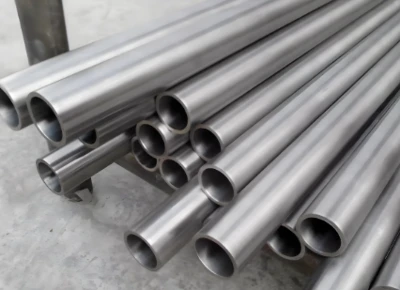
The manufacturing process of titanium tubes is affected by many factors, some of the main factors are introduced below.
1. Material properties: Titanium metal has high strength and corrosion resistance, but its plasticity is poor. Therefore, in the manufacturing process of titanium tubes, it is necessary to consider how to maintain their strength and corrosion resistance while giving them good plasticity for subsequent processing and forming operations.
2. Manufacturing equipment and process: Titanium tubes are usually manufactured by combining hot working and cold working. Hot working includes forging, hot rolling and hot extrusion, while cold working includes cold rolling, cold drawing and cold extrusion. Different manufacturing equipment and processes will have a significant impact on the performance and quality of the product.
3. Previous processing technology: Titanium tubes are usually made from titanium plates or titanium billets. Therefore, previous processing techniques, such as cutting, calendering and tempering, will have an impact on subsequent manufacturing processes. If the processing technology of titanium plate or titanium billet is improper, it will cause problems such as impurities, cracks and internal stress, which will affect the manufacturing process of titanium tube and the quality of the product.
4. Temperature control: The melting point of titanium metal is relatively high, generally around 1668°C. By controlling the temperature during the manufacturing process, the physical and chemical properties of titanium tubes can be greatly influenced. For example, temperature control during forging can make the titanium tube achieve good plasticity, while too high or too low temperature will cause problems.
5. Deformation control: During the manufacturing process of titanium tubes, they need to be deformed through different processing methods to achieve the desired shape and size. Therefore, the control of the deformation process is of great significance. Proper deformation control can improve the mechanical properties of titanium tubes, but excessive or insufficient deformation may lead to problems such as loss of material balance and local excessive strain.
6. Environmental factors: Titanium metal easily reacts with elements such as oxygen and nitrogen during the manufacturing process, so it needs to be manufactured in a controlled atmosphere. Environmental factors also include humidity and dust. For example, during the cold working process, humidity control and prevention of dust contamination have a key impact on maintaining the surface finish and quality of titanium tubes.
7. Worker skills and experience: The manufacturing of titanium tubes requires high skills and experience of workers. In each manufacturing step, such as heating, forging, cold working, etc., workers are required to have corresponding skills and experience to ensure the smooth progress of the manufacturing process and the reliable guarantee of product quality.
8. Safety: Since high temperature and high energy environments may be generated during the manufacturing process of titanium tubes, the manufacturing process must be strictly managed and controlled to ensure the personal safety of workers and the protection of the environment.
The manufacturing process of titanium tubes is affected by many factors, including material properties, manufacturing equipment and processes, previous processing technology, temperature control, deformation control, environmental factors, worker skills and experience, and safety. Through scientific process and technological improvements, the manufacturing process can be optimized and the quality and performance of titanium tubes can be improved.


