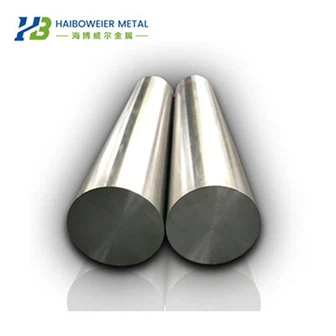
Advantages Of Titanium Alloy in Reactors
Reactors are among the most critical equipment in chemical production, often operating under highly corrosive media, high temperatures, and high-pressure conditions. The performance of materials directly affects reactor lifespan, production efficiency, and operational safety. Titanium alloys, with their unique corrosion resistance, high strength, and excellent machinability, are becoming an essential material choice for modern reactor construction. Using titanium alloys can effectively resist chemical corrosion, reduce maintenance costs, and extend equipment service life, providing chemical enterprises with stable and efficient production support while ensuring reliable operation under high-load conditions and continuous processes.

Exceptional Corrosion Resistance
Titanium alloys demonstrate stable and reliable performance in various highly corrosive environments, allowing reactors to operate safely for extended periods.
- Forms a dense oxide layer that effectively resists acids like hydrochloric and sulfuric acid, as well as chloride media
- Reduces material loss caused by corrosion
- Minimizes downtime and maintenance, ensuring continuous production
- Enhances long-term operational reliability of reactors
The corrosion resistance of titanium alloys enables equipment to maintain performance in complex chemical environments, avoiding frequent replacements and production interruptions.
Excellent Mechanical Performance
The high strength and good ductility of titanium alloys allow reactors to maintain structural stability under high pressure and impact conditions.
- High strength prevents deformation of the vessel under high-pressure reactions
- Good ductility reduces the risk of cracking or rupture
- Withstands long-term repeated thermal cycles and mechanical stress
- Improves overall structural safety of the reactor, ensuring stable reactions
The mechanical stability of titanium alloys ensures reactor safety during high-temperature, high-pressure, and intense agitation conditions, providing reliable production support.
High-Temperature Performance
Chemical reactions often involve high-temperature operations, requiring materials to maintain mechanical properties and chemical stability over extended periods.
- Maintains excellent strength in high-temperature environments
- Strong resistance to thermal stress reduces risk of thermal fatigue and localized damage
- Can be combined with other high-temperature materials to improve overall structural stability
- Suitable for continuous production and high-temperature, high-pressure reaction conditions
The high-temperature performance of titanium alloys ensures that reactors retain stable properties during long-term operation, meeting the needs of complex chemical processes.
Ease of Fabrication and Maintenance
Titanium alloys offer excellent machinability, enabling the fabrication of complex reactor bodies and accessories while reducing long-term maintenance costs.
- Easily fabricated into complex vessels and support structures
- Good compatibility with various sealing systems
- Low maintenance frequency during long-term use, reducing operational costs
- Improves overall production efficiency and equipment reliability
The application of titanium alloys in reactors not only enhances corrosion resistance and mechanical stability but also maintains stable performance under high-temperature and high-pressure conditions, significantly extending service life and reducing maintenance costs. Proper material selection and design enable reactors to operate more efficiently and safely under continuous and high-intensity production conditions, providing a solid foundation for modern chemical manufacturing.