The Corrosion Resistance Advantages Of Titanium Alloys in Marine Oil And Gas Equipment
Marine oil and gas equipment operates in high-salinity seawater, sulfur-containing media, and complex chemical environments for extended periods. Corrosion is a critical factor affecting equipment lifespan and safety. Material failure not only leads to equipment downtime but can also pose significant risks. Titanium alloys, with their stable chemical properties and excellent corrosion resistance, are widely used in the marine oil and gas sector, providing reliable protection for long-term equipment operation.
Corrosion Performance Requirements of the Marine Oil and Gas Environment
Marine oil and gas extraction environments contain salt spray, dissolved oxygen, and various corrosive ions, which continuously act on the equipment surface. Ordinary metals are prone to pitting corrosion, crevice corrosion, and even stress corrosion cracking in such environments, affecting structural integrity. Equipment operating in deep-sea conditions must also withstand high pressure and temperature variations, placing even higher demands on material stability. Materials capable of maintaining performance over long periods in complex environments are crucial.
Self-Protective Oxide Film Characteristics of Titanium Alloys
Titanium alloys can rapidly form a dense oxide film in air or seawater. This film adheres firmly and exhibits good stability. Even after localized damage, it can regenerate rapidly and continue to provide protection. It is this self-healing ability that gives titanium alloys their long-term corrosion resistance in seawater environments. Compared to materials that rely on external coatings, this intrinsic protection mechanism is more reliable.
Resistance to Pitting and Crevice Corrosion
Pitting and crevice corrosion are common problems in marine oil and gas equipment, especially in joints or structural gaps. Titanium alloys have strong resistance to chloride ions, making them less prone to forming localized corrosion pits, thus maintaining surface integrity. In complex structures, titanium alloys can also effectively reduce corrosion propagation and lower the risk of equipment damage. This performance is particularly important for oil and gas equipment operating for extended periods.
Key Optimization Measures in Titanium Alloy Applications
To further enhance the corrosion resistance of titanium alloys, the following methods can be combined in practical applications:
- Improve surface processing precision: Reduce microscopic defects and lower the corrosion initiation point.
- Optimize structural design: Avoid areas where water or corrosive media accumulate.
- Rationally control stress distribution: Reduce the risk of stress corrosion.
- Select the appropriate titanium alloy type: Match performance requirements according to operating conditions.
- Establish a regular inspection mechanism: Identify and address potential problems promptly.
These measures can further enhance material stability.
Application Value and Trends in Marine Oil and Gas Equipment
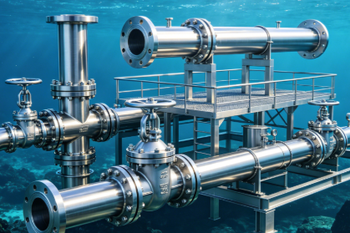
Titanium alloys have been widely used in key components such as subsea pipelines, heat exchangers, valves, and deep-sea oil production equipment. In complex media environments, their stable performance can significantly extend equipment lifespan and reduce maintenance frequency. As oil and gas development gradually extends to deep-sea areas, the demand for high-performance materials continues to increase, and the application scope of titanium alloys is also continuously expanding. In the future, its importance in high-end marine equipment will be further enhanced.
Titanium alloys, with their stable oxide film protection and excellent corrosion resistance, demonstrate significant advantages in marine oil and gas equipment. Through reasonable application and optimized design, equipment reliability and service life can be effectively improved, providing strong support for marine energy development.