Grade 1 vs Grade 2 Titanium Foil: Which One Is Right for Your Project
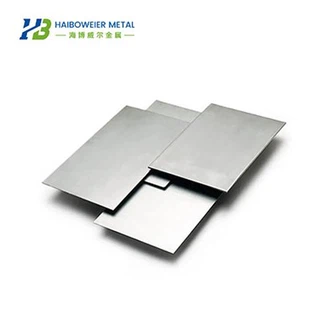
Titanium foil rolls are prized for their lightweight, high strength, and excellent corrosion resistance, making them essential in industries such as aerospace, medical, electronics, and chemical processing. Among the commercially pure titanium grades, Grade 1 and Grade 2 titanium foil rolls are the most commonly used. But what exactly sets them apart? And how do you choose the right one for your application? This article offers a comprehensive comparison to help you make an informed decision.

Understanding the Basics: Grade 1 vs Grade 2 Titanium Foil
Grade 1 titanium is the softest and most ductile of all commercially pure titanium grades. It contains the highest level of titanium purity (above 99.5%), offering exceptional corrosion resistance and formability. However, its tensile strength is lower compared to other grades.
On the other hand, Grade 2 titanium also maintains excellent corrosion resistance and good ductility, but with slightly lower purity and significantly higher strength. It is considered the most commonly used grade in industrial applications, offering a balanced combination of formability and mechanical performance.
Key Performance Differences
When comparing Grade 1 and Grade 2 titanium foils, their differences in strength, ductility, and chemical resistance are the most critical.
Tensile strength is notably higher in Grade 2, making it better suited for structural applications where load-bearing capability is important. Grade 1, while lower in strength, excels in applications requiring deep drawing, bending, or forming due to its superior ductility.
Corrosion resistance is excellent in both grades, but Grade 1 slightly outperforms Grade 2 in extremely aggressive environments, such as those with high chloride content or oxidizing acids.
Weldability and biocompatibility are equally excellent in both grades, making them suitable for medical and precision engineering applications.
Choosing the Right Grade Based on Application
In medical and biomedical applications, such as surgical instruments, implants, and protective layers for medical devices, Grade 1 titanium foil is often the preferred choice due to its high purity and excellent biocompatibility.
For chemical processing equipment, including heat exchangers, reactors, and electrolytic systems, Grade 2 titanium foil is usually recommended. Its enhanced strength provides greater structural integrity without sacrificing corrosion resistance.
In electronics and battery industries, where precision, conductivity control, and EMI shielding are required, both grades may be used depending on whether greater flexibility (Grade 1) or added strength (Grade 2) is desired.
For deep drawing, spinning, or other complex forming operations, Grade 1 titanium foil is ideal because of its superior formability and reduced spring-back effect during processing.
Which Offers Better Value?
From a cost-performance standpoint, Grade 1 is more cost-effective when corrosion resistance and workability are top priorities, and the application does not involve significant structural loads. Grade 2 is ideal when strength is a key requirement, offering an optimal trade-off between performance and durability.
Choose Based on Application Needs
There is no universally "better" grade between Grade 1 and Grade 2 titanium foil; the choice depends entirely on the specific requirements of your project. Consider factors such as strength, corrosion resistance, ductility, and intended application environment.
If you're unsure which grade to choose, HAIBOWEIER METAL offers expert guidance and high-quality titanium foil rolls tailored to your needs. Contact us today to explore material samples and technical consultations.