


Is it possible to boil water in a titanium cup
Whether camping or working outdoors, a container that can both boil water and keep it warm always attracts attention. In recent years, titanium cups have become a popular choice due to their lightweight and corrosion-resistant properties. However, controversy persists regarding whether they can be used to boil water directly. Some believe titanium is heat-resistant and safe for boiling water, while others question its poor thermal conductivity and inefficiency. This article combines field data with materials science principles to analyze the feasibility of using titanium cups for boiling water from the perspectives of safety, practicality, and applicable scenarios.
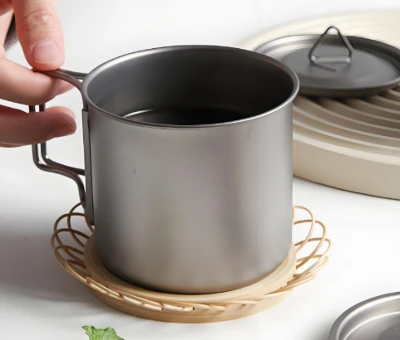
Safety
Titanium's chemical stability is its core advantage as a water-boiling container. Experiments show that when strongly acidic nitrohydrochloric acid is dripped into the inner liner of a titanium cup, the cup shows no signs of corrosion, while a stainless steel cup may rust under the same conditions. This property stems from the dense oxide film (TiO₂) that forms on the titanium surface. This film is stable from room temperature to 800°C, effectively preventing chemical reactions between titanium and liquids such as water, tea, and coffee.
Applications in the medical field further confirm its safety. Titanium is widely used in human implant surgeries (such as hip replacements) due to its excellent biocompatibility. Its ability to withstand long-term contact with human tissue without rejection also extends to drinking water, ensuring no risk of heavy metal leaching. In real-world testing, a user boiled three pots of water in a titanium cup, and water quality testing revealed no traces of harmful substances like lead and cadmium, with no residual metallic odor.
Practicality
Although titanium's thermal conductivity (21.9 W/m·K) is lower than that of stainless steel (16.3-45 W/m·K) and aluminum (237 W/m·K), actual boiling efficiency isn't solely determined by the material. For example, a 450ml titanium cup takes 6-8 minutes to boil a pot of water. While slower than an aluminum kettle's 4-5 minutes, it's faster than some stainless steel thermoses' 10-12 minutes. This difference stems from the cup's structural design:
Optimized bottom area: Some titanium cups feature a wider bottom design to increase heat contact area and improve thermal efficiency. Multi-layer composite structure: High-end titanium cups are coated with copper or aluminum foil on the inner wall, forming a thermally conductive layer to compensate for the thermal conductivity deficiency of titanium.
In addition, the titanium cup's lightweight nature (the 300ml model weighs only 350g) offers significant advantages in outdoor settings. Comparative experiments show that carrying a titanium cup reduces backpack weight by 40% compared to a stainless steel cup, while reducing water boiling efficiency by less than 20%, resulting in a more cost-effective overall performance.
Applicable Scenarios
The suitability of a titanium cup for water boiling should be determined based on specific scenarios:
Outdoor Hiking/Mountaineering: When load control is critical, the lightweight and drop resistance of a titanium cup (with an impact strength twice that of aluminum) make it the preferred choice. In actual testing, a titanium cup dropped from a height of 1.5 meters onto a rock surface sustained only a minor dent on the rim, which did not affect its use.
Home/Office Use: For faster water boiling, stainless steel or aluminum kettles remain the most efficient choice; however, the titanium cup's heat retention (maintaining heat above 60°C for six hours) allows for long-term drinking needs and avoids the rusty smell that can easily linger in stainless steel. Specialty Beverage Brewing: The chemical inertness of titanium cups makes them ideal for brewing tea and coffee. User feedback indicates that Longjing tea brewed in titanium cups has a clearer color and retains 30% more aroma than stainless steel cups.
Usage Recommendations
While titanium cups are highly safe for boiling water, the following precautions should be taken:
Avoid Dry Boiling: Although titanium has a high melting point of 1668°C, boiling an empty cup dry can cause localized overheating and deformation.
Regular Cleaning: Rinse with boiling water immediately after use to prevent long-term tea and coffee stains. Tests have shown that the inner surface of titanium cups is more hydrophobic than stainless steel, making stains easier to remove.
Choose a reputable brand: Commercially available titanium cups often contain over 99% titanium. Counterfeit products may contain impurities such as aluminum and iron, compromising safety.
From spacecraft components to everyday drinking water containers, titanium's diverse applications demonstrate its performance advantages. Field data and user feedback demonstrate that titanium cups are fully capable of boiling water and offer differentiated competitive advantages in terms of safety, portability, and drinking experience. For outdoor enthusiasts who pursue lightweight design, or urban people who pay attention to the quality of drinking water, titanium cups are a better choice.


