


Several methods of titanium tube straightening, do you know?
There are many methods for straightening titanium tubes. Straightening is a crucial link in the manufacturing and use of titanium tubes. To obtain high-quality titanium tube products, appropriate straightening methods are required. Several main methods of titanium tube straightening introduced in this article include tension straightening, sine straightening, pressure straightening, etc.
1. Tension straightening
Tension straightening is a good way to straighten titanium tubes. By applying a vertical tension greater than the yield limit of the material, the titanium tube is plastically expanded, thereby solving its shape defects. Tensile stress is applied to the titanium tube with corrugated defects on the tension straightening machine. The initial residual stress of the titanium tube is superimposed on this tensile stress. In the area where the titanium tube is extended more, part of the tensile stress is offset, reducing the actual deformation stress and minimizing the plastic extension during straightening; in the part with less extension, due to the accumulation of tensile stress, plastic widening is achieved during straightening, but the deformation stress actually increases. In this way, the titanium tube can be evenly elongated under tension, thereby eliminating the corrugated defect.
2. Sinusoidal straightening
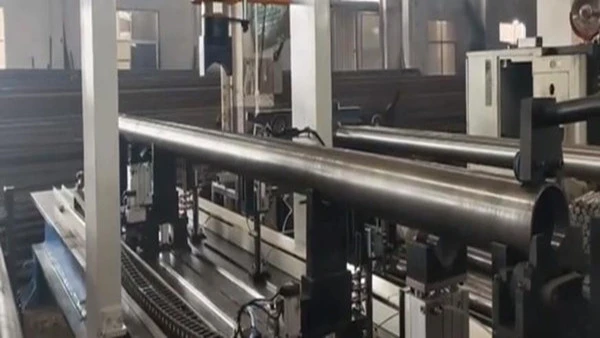
Sinusoidal straightening is another commonly used method for straightening titanium tubes. Titanium tubes and bars with straight cross-sectional shapes like this are very suitable for straightening by this method. Sinusoidal straightening usually uses an oblique roller straightening machine, which has more than four rollers, generally five to ninety-nine. The working principle of the oblique roller straightening machine is to gradually reduce the range of variation of the residual curvature of the workpiece by continuously bending three points of the workpiece through each roller to achieve the purpose of straightening. Pressure straightening is usually used in conjunction with sine straightening. For titanium tubes with large curvature, the pressure straightening machine is first used for preliminary straightening, and then oblique roller straightening is performed. The straightening effect mainly depends on the pressure of the straightening machine and the inclination angle of the roller. The pressure is determined by the yield strength and bending degree of the alloy material, and the size of the roller inclination angle is determined by the diameter of the workpiece.
3. Pressure straightening
Pressure straightening is another important method for straightening titanium tubes. In the pressure straightening process, the appropriate straightening pressure should be determined according to its bending degree and the yield strength of the alloy material. When the curvature of high-strength titanium alloy is large, a larger straightening pressure is required; for low-strength alloys or titanium tubes with small curvature, a lower straightening pressure can be used. After straightening, the titanium tube should be inspected. Those that cannot be straightened should be taken out of the strain straightening machine for straightening, and unsuitable workpieces should be returned for re-straightening.
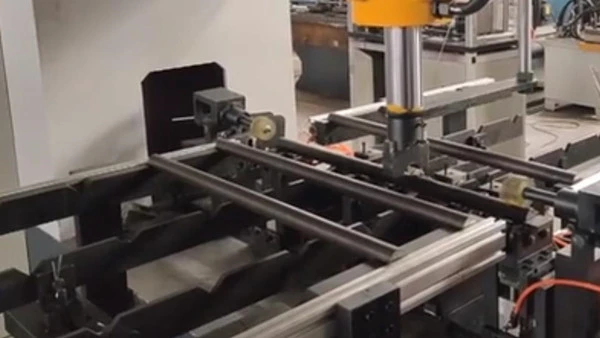
Combined with the above, the most commonly used process methods for straightening titanium tubes are pressure straightening, tensile straightening and sine straightening. In practical applications, the appropriate straightening method should be selected according to the material, specification, curvature, etc. of the titanium tube to ensure the quality of the titanium tube product. Its processing accuracy and processing quality are the key factors affecting the quality of titanium tube products.


