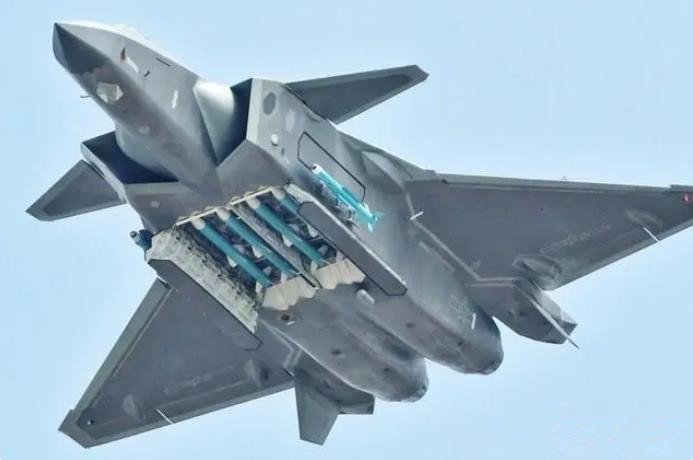
The main frame of the J-20 uses 3D titanium alloy technology
Today, with the quick advancement of science and innovation, we have ushered in an exciting moment. An outstanding team from the Institute of Metal Research, Chinese Academy of Sciences,has successfully developed a new type of 3D printed titanium alloy material.. Its weakness strength has broken the world record, opening up new possibilities for applications in the aviation field. This significant advancement not just shows the jump in my country's logical examination strength, yet additionally carries additional opportunities to worldwide aviation innovation.
For the airplane business, titanium alloy is a crucial material. It enjoys many benefits like light weight, high strength, and consumption obstruction. It is a vital material for assembling superior execution airplane like planes and rockets. Notwithstanding, customary titanium combination handling techniques have numerous impediments, particularly lacking weakness strength in outrageous conditions. This issue has pained logical specialists and designers for quite a while and has turned into a bottleneck confining the further improvement of aviation innovation.
It is against this background that the research team of the Institute of Metal Research, Chinese Academy of Sciences rose to the challenge. After countless experiments and explorations, they finally discovered that there is a specific process window in the high-temperature stage. By precisely controlling this window, the "printing additive" of titanium alloy can be made more refined, effectively suppressing the generation of pores and gaps, thereby significantly improving the strength of the material. This discovery not only solves the strength problem of traditional 3D printing titanium alloys, but also brings epoch-making progress in the aerospace field.
hese days, in the field of avionics producing, standard airplane, for example, J-20, F-22 and F-35 widely use 3D titanium alloy components.Among them,Among them, the F-22 fighter jet's titanium alloy accounts for as much as 41%, while the F-35's proportion is reduced to about 19%, but its 3D printed parts are larger in size. The new 3D printing titanium alloy material developed by the Chinese Academy of Sciences solves this problem and provides the possibility of to create bigger and more perplexing parts.
Nonetheless, as the size of parts builds, the strength issue turns out to be increasingly noticeable. The new 3D printing titanium composite material created by the Chinese Foundation of Sciences takes care of this issue and gives the chance of 3D printing titanium amalgam parts with bigger sizes and more intricate designs.
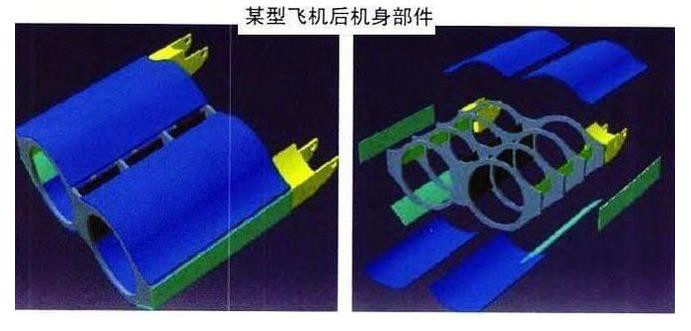
The new innovation has been spearheaded in the J-20 warrior fly, extraordinarily working on the contender's presentation. As the biggest single 3D part on a contender airplane, the fruitful printing of the fundamental burden bearing casing completely shows the application capability of 3D printed titanium composite materials in the flying field. This accomplishment not just empowers the J-20 contender to accomplish a subjective jump in execution, yet additionally infuses new imperativeness into the improvement of my country's flying industry.
Driven by the innovative work aftereffects of the Chinese Institute of Sciences, the number and size of 3D titanium compound parts for homegrown high level warrior airplane will increment. The ideal arrangement of the gentility and strength of titanium combination is of extraordinary importance to the improvement of the presentation of homegrown contender airplane. With the boundless use of this innovation, we have motivation to accept that future homegrown warrior airplane will be further developed, more secure, and more dependable.
The country's disclosure of this technology indicates that more advanced material technology may have been applied to a new generation of fighters.The turn of events and use of this leading edge 3D printing titanium combination material will most likely advance mechanical advancement and creative improvement in the aviation field. Simultaneously, this likewise exhibits our nation's solidarity and assurance in mechanical advancement, making us more not entirely settled on the worldwide stage.
This major breakthrough by the Institute of Metal Research, Chinese Academy of Sciences not only brings new hope and opportunities to my country's aerospace field, but also contributes Chinese wisdom and strength to global scientific and technological progress.