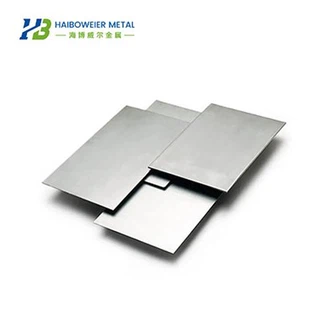
Titanium alloy product hydroforming technology
Hydroforming technology for titanium alloy products is an advanced processing method that is widely used in the manufacturing of metal processing fields, including the manufacturing of titanium alloy products. This technology has some significant advantages, but also comes with some challenges and difficulties.
hydroforming technology for titanium alloy products :
1. Hydroforming technology of titanium alloy products can realize the manufacturing of complex shapes. Through hydroforming technology, titanium alloys can be plastically deformed into various complex shapes, such as thin-walled structures, curved parts, etc., to meet the needs of product shapes in different fields.
2. Hydroforming technology of titanium alloy products can improve product quality. During the hydroforming process, due to the uniform distribution of stress, the formed titanium alloy products have better mechanical properties and surface quality. Compared with traditional processing methods, hydroforming technology can reduce or avoid defects and deformation problems caused by cold working, thereby improving product reliability and service life.
3. The hydroforming technology of titanium alloy products also has the characteristics of high efficiency. Hydroforming machinery and equipment adopt automated control systems to achieve fast and precise processing. Compared with traditional manual operations, hydroforming technology can greatly shorten the processing cycle and improve production efficiency.
High-precision manufacturing: Hydroforming technology can provide highly precise forming and can manufacture titanium alloy products with complex shapes and high-precision requirements.
Good surface quality: Through hydroforming, titanium alloy products with smooth surfaces and no obvious scratches or dents can be obtained, reducing the need for subsequent processing steps.
Reduce material waste: Compared with traditional cutting processing, hydroforming technology can minimize material waste and improve material utilization.
Efficient production: The hydroforming process is relatively rapid, enabling large-scale, batch production and improving production efficiency.
Suitable for large parts: Hydroforming technology is suitable for manufacturing large parts and can meet some special needs, such as aircraft structures, spacecraft parts, etc.
Cost-effectiveness: Hydroforming technology can reduce manufacturing costs to a certain extent by reducing subsequent processing steps, improving material utilization and achieving mass production.
Difficulties in hydroforming technology of titanium alloy products
1. The hydroforming process of titanium alloy has high requirements on equipment. Due to the high strength and hardness of titanium alloys, greater pressure and stronger equipment are required to achieve forming. This puts forward higher requirements for the design and manufacturing of hydroforming equipment.
2. Hydroforming technology for titanium alloy products also has certain challenges in terms of cost. The investment and maintenance costs of hydroforming equipment are relatively high, and the cost of titanium alloy materials themselves is also relatively high. Therefore, the practical application of hydroforming technology for titanium alloy products requires economic analysis and reasonable cost control.
Material properties: The special properties of titanium alloys, such as high hardness, high strength and difficult machining, increase the difficulty of hydroforming. Appropriate hydroforming parameters and process conditions need to be selected.
Process debugging is difficult: For each titanium alloy product of different shapes and sizes, the process parameters of hydroforming need to be carefully adjusted and optimized, which involves a complex process debugging process.
Forming consistency: As the size of parts increases, forming consistency challenges may arise during hydroforming, and measures need to be taken to ensure forming uniformity.
High equipment requirements: High-strength hydroforming equipment requires large investments and requires high precision and controllability of the equipment.
Surface treatment: Titanium alloys usually require high-quality surface treatment, and local stress concentrations and deformations may occur during the hydroforming process, requiring additional surface treatment steps.
Forming limit: The forming limit of titanium alloys is relatively low, and the desired shape needs to be achieved without compromising material properties.
In practical applications, by continuously improving process technology and equipment performance, these difficulties can be overcome and the application level of hydroforming technology in titanium alloy manufacturing can be improved.
Hydroforming technology for titanium alloy products has the advantages of complex shapes, high product quality and high efficiency. However, difficulties such as high equipment requirements and high costs need to be overcome during the application process. With the continuous development of science and technology, it is believed that titanium alloy product hydroforming technology will be further improved and applied, bringing more opportunities and challenges to the development of various fields.