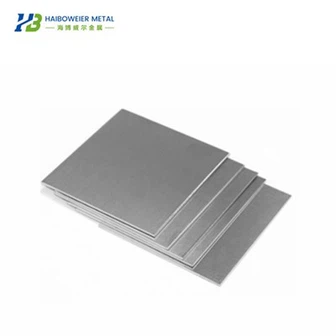
What treatments can be performed on the outer layer of titanium?
introduce
Titanium metal has excellent properties and numerous application possibilities, making it an important structural material. However, titanium's outer layer is not resistant to factors such as oxidation, erosion and wear, which can reduce its service life and performance. To overcome these problems, innovations in titanium surface treatments have emerged.
Processing treatments that can be performed on titanium metal surfaces
1. Electroplating
The interaction of metal or composite materials is used to coat the outer layer of titanium using the principle of electrolysis. Titanium is often used to further develop its corrosion resistance and style. In the electroplating system, titanium metal serves as the cathode filler and the covering material serves as the anode filler. Particles in the electrolyte move the charge to complete the proofing of the coating. This electroplating process is suitable for titanium metal products of various shapes and sizes, and has the advantages of short processing cycle, low cost, and uniform coating thickness.
2. Sandblasting
Sandblasting is an interaction that utilizes rapid air currents to blast sand particles onto the outer layer of titanium metal to eliminate surface dirt, oxides, and handling marks. Sandblasting can not only solve the problem of unsightly titanium metal surfaces, but also improve the adhesion of the covering layer. Sandblasting can be used for surface treatment of large titanium metal products because of its ease of use and high efficiency.
3. Pickling
Pickling is a cycle that uses corrosive agents to react with oxides and deterioration of the outer layer of titanium metal to eliminate surface dirt and oxides. In pickling systems, corrosive agents artificially react with the titanium outer layer to produce solvent salts, which are then washed away by cleaning experts. This pickling process is suitable for titanium metal products of various shapes and sizes, and has the advantages of simplicity, efficiency, and low cost.
4. Micro-arc oxidation
Micro-arc oxidation is an interaction that uses microscopic bending to create a ceramic coating on the outer layer of titanium metal, creating a high-temperature and high-pressure environment through micro-arc discharge. During the micro-arc oxidation process, a dense ceramic coating is formed on the surface of titanium metal, which has excellent wear resistance, corrosion resistance and insulation properties. The microbend oxidation process delivers dramatic results on titanium metal in a variety of shapes and sizes and is particularly suitable for consumer safety applications in marine environments.
5. Anodizing
The most common method of forming an anodized film on the outer layer of titanium metal using electrolytic standards. In the anodizing framework, titanium metal acts as an anode filler and moves charges through the particles in the electrolyte, in this way forming a thick anodized film on the outer layer of titanium metal. The anodized frame has the advantages of wear resistance, low utilization rate, good protective performance and beautiful appearance, and is suitable for titanium metal products of various shapes and sizes.
6. Polishing
Polishing is a process that uses abrasives and polishing agents to grind and polish the surface of titanium metal. During the polishing process, abrasives and polishing agents work together to make the surface of titanium metal as smooth as a mirror. This cleaning system is suitable for titanium metal products of various shapes and sizes, and has the advantages of high processing quality and high surface finish.
7. Crystallization
Crystallization is a cycle in which titanium metal is heated and cooled to form a translucent covering on its surface. During the crystallization interaction, the outer layer of titanium metal heats up and relaxes, forming a glassy covering layer under the action of surface strain during cooling. This crystallization period is reasonable for titanium metals of different shapes and sizes, and has the advantage of hindering wear and resisting consumption.
Summarize
So, these are seven processes that should be possible on titanium surfaces. Each process has different application scope and characteristics. It's the interplay of titanium surface treatments that really bring out the appearance of titanium surfaces and further develop their wear resistance, abrasion resistance and strength. By choosing the appropriate surface treatment process, titanium metal can be used more widely and reliably in different fields. In the future, with the continuous advancement of science and innovation, titanium surface treatment technology will continue to be improved and created, bringing more possibilities