


The Key Role Of Titanium Alloys in Marine Engineering Structures
With the deepening development of marine resources, marine engineering structures face increasingly complex environments, such as high salinity corrosion, high pressure, and long-term underwater service, placing higher demands on material performance. Among many engineering materials, titanium alloys, with their excellent comprehensive properties, have gradually become an important choice in the field of marine engineering, playing an irreplaceable role in improving structural stability and extending service life.
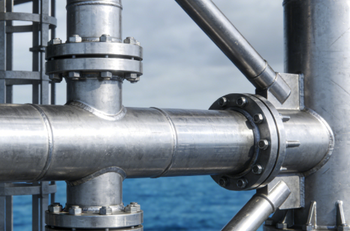
Excellent Corrosion Resistance
The marine environment contains a large amount of chloride ions, which are extremely corrosive to metallic materials. However, titanium alloys can form a dense oxide film on their surface. This protective film has extremely high stability and can effectively prevent further penetration of corrosive media. Even after long-term immersion or in complex seawater environments, it can maintain good performance. This characteristic gives it a significant advantage in seawater pipelines, offshore platforms, and subsea equipment.
Advantages of High Strength and Lightweight Design
In marine engineering structures, materials not only need sufficient strength but also need to minimize their weight to reduce structural load and improve installation efficiency. Titanium alloys, while maintaining high strength, have a relatively low density, effectively reducing overall weight compared to traditional steel. This is particularly important for deep-sea equipment, offshore platforms, and floating structures, helping to improve overall stability and reduce energy consumption.
Application Performance in Key Structures
Titanium alloys have a wide range of applications in marine engineering, and their performance advantages are evident in several key components:
- Heat exchangers in seawater desalination equipment, improving corrosion resistance
- Key connecting components of offshore platforms, enhancing structural reliability
- Shells of deep-sea exploration equipment, withstanding high-pressure environments
- Submarine pipeline systems, extending service life
- Key parts of ships, reducing maintenance frequency
These applications demonstrate the adaptability of titanium alloys in complex environments and also promote the development of marine engineering technology.
Fatigue Resistance and Long-Term Stability
Marine engineering structures are subjected to various dynamic loads during long-term use, including wave impact, tidal changes, and equipment vibration. These factors can easily lead to material fatigue damage. Titanium alloys possess excellent fatigue resistance, maintaining structural stability under repeated stress, thereby reducing the risk of crack formation and improving overall safety. This is of great significance for marine facilities requiring long-term operation.
Good Biocompatibility and Environmental Characteristics
In some specialized marine engineering fields, such as marine ecological equipment or structures with frequent contact with marine life, the environmental friendliness of materials is particularly important. Titanium alloys exhibit good biocompatibility, minimizing negative impacts on marine organisms. Furthermore, their corrosion resistance reduces the release of metal ions, making them more environmentally friendly. This characteristic gives them broad application prospects in green marine engineering.
Impact of Processing and Cost Factors
Although titanium alloys offer numerous advantages, their processing is relatively difficult, requiring stringent equipment and processes. Furthermore, their material costs are higher than traditional metals, which to some extent limits their large-scale application. However, with continuous advancements in manufacturing technology, processing efficiency is gradually improving, and costs are being optimized, leading to a sustained expansion of titanium alloy applications in marine engineering.
Driving the Development of Marine Engineering Technology
The application of titanium alloys not only enhances the performance of individual structures but also has a positive impact on the entire marine engineering technology system. Their superior properties provide more possibilities for deep-sea development, enabling engineering equipment to operate stably in more complex and extreme environments. Simultaneously, it promotes the coordinated development of materials science and engineering technology, laying a solid foundation for future marine resource utilization.


