Is titanium easily deformed?
In the world of metallic materials, titanium has attracted much attention due to its unique physicochemical properties and wide range of applications. This silvery-white transition metal not only possesses lightweight and high strength, but also boasts excellent corrosion resistance and biocompatibility, making it a "star material" in high-end fields such as aerospace, medicine, and chemical engineering. However, the question of whether titanium is easily deformable requires in-depth discussion from three dimensions: the essence of materials science, processing technology control, and practical application scenarios.

Crystal Structure and Deformation Basis of Titanium
The deformation characteristics of titanium are closely related to its crystal structure. Below 882.5℃, titanium exists as the α phase with a hexagonal close-packed (HCP) structure; when the temperature exceeds this critical point, it transforms into the β phase with a body-centered cubic (BCC) structure. This allotropic transformation endows titanium with unique deformation capabilities: α-phase titanium, due to its fewer slip systems, has limited plastic deformation capabilities at room temperature, but can coordinate strain through the formation of twins (a deformation mechanism in which crystals undergo mirror-symmetric deformation along specific crystal planes); β-phase titanium, with its abundant slip systems, exhibits stronger plastic deformation capabilities at high temperatures. For example, in the manufacturing of aero-engine blades, TC4 (Ti-6Al-4V) alloy, by controlling the β-phase content, can achieve precise forming of complex shapes during high-temperature forging.
Control of Titanium Deformation Behavior by Processing Technology
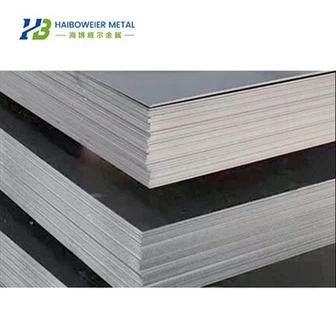
While titanium's processing performance is not as good as traditional materials like aluminum alloys, its deformation capacity can be significantly improved through process optimization. Taking forging as an example, pure titanium can achieve an elongation of 50%-60% and a reduction of area of 70%-80% at room temperature, but the amount and speed of deformation must be strictly controlled-the forging ratio needs to be above 3:1 to compact the internal porosity; slow deformation reduces internal stress, while rapid deformation refines the grains and improves strength. In the rolling process, titanium materials need to undergo multiple deformations at high temperatures, and annealing is used to eliminate work hardening, ultimately obtaining plates with uniform thickness and stable performance. A titanium alloy processing company, by introducing cold hearth furnace melting technology, increased the purity of titanium ingots to 99.99%, reducing the subsequent rolling crack rate by 60% and significantly improving the material's formability.
The Double-Edged Sword Effect of Titanium's Deformation Properties
Titanium's deformability brings both advantages and challenges. In the medical field, titanium's biocompatibility and moderate plasticity make it an ideal material for artificial joints and dental implants-its elastic modulus (approximately 110 GPa) is close to that of human bone, avoiding stress shielding effects; its surface oxide film (approximately 2-10 nm thick) not only resists corrosion from bodily fluids but can also reduce roughness to below 0.1 micrometers through electrolytic polishing, reducing bacterial adhesion. However, titanium has a significant tendency for work hardening, easily generating high temperatures during machining, leading to tool wear, requiring the use of carbide tools and high-pressure coolants; during welding, heat input must be strictly controlled to avoid hydrogen-induced cracking (HIC) and nitrogen porosity defects. One automotive parts manufacturer improved the welding pass rate of titanium alloy exhaust manifolds from 75% to 98% by adopting laser welding technology.
Future Trends: From Deformation Control to Intelligent Manufacturing
With breakthroughs in technologies such as 3D printing and near-net-shape forming, the deformation control of titanium is entering a new stage. Electron beam melting (EBM) technology can directly print titanium alloy parts with complex geometries, reducing material waste; deformation heat treatment (TMCP), by coupling deformation and heat treatment, can achieve grain refinement and performance optimization in a single process. Market research institutions predict that by 2030, global consumption of processed titanium materials will grow at an average annual rate of 8.2%, with the aerospace sector accounting for over 40% and the medical sector growing at 15%. As the world's largest titanium producer, China is breaking through the bottlenecks in high-end titanium material preparation technology through collaborative innovation involving industry, academia, research, and application, driving titanium's transformation from a "niche luxury" to a "mass-market premium."
The deformability of titanium is a product of material genes, technological wisdom, and engineering needs. It is neither a "easily deformable" soft metal nor a "difficult-to-process" hard metal, but rather a balance between performance and cost achieved through scientific control. From the pressure-resistant shells of deep-sea probes to the precision wires of cardiac stents, titanium is writing a new chapter in materials science with its unique deformability language.