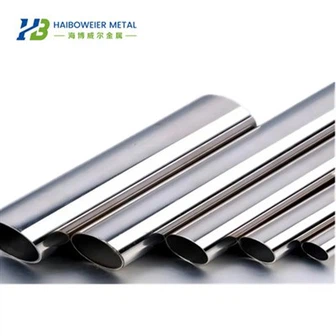
Titanium composite plate
Metal composite panel materials have excellent comprehensive performance and reasonable economy. The economy of composite materials has obvious advantages. Compared with single metal, the thickness of the cladding layer is smaller, and the design plate thickness can also be reduced, which greatly saves the amount of investment. Titanium composite plate is a new type of engineering structural material obtained using explosive welding high-energy processing methods. It not only has the special properties of corrosion resistance, heat resistance, and abrasion resistance of clad materials, but the base layer also has the strength and stiffness required by the structure. As an ideal engineering structural material, titanium composite panels are suitable for widespread use of explosive metal composite materials in industrial fields such as oil refining, petrochemicals, chemicals, electrolytic aluminum, light industry, food, seawater desalination, water conservancy and hydropower, nuclear energy, high energy physics, and environmental protection. The thickness ratio between the base layer and the cladding layer is selected based on the design and usage requirements. Metal composite materials with special specifications and sizes can be determined through negotiation to meet user needs.
In order to reduce costs, various companies have begun to pay attention to metal composite panel materials. Now domestic companies are trying to use them or initially using them. In the U.S. steel market, composite panel materials have accounted for about 40% of the steel market. In Japan, It also accounts for about 35% of the steel market. The development of explosive composite materials is an important part of the material science revolution that is spreading all over the world today. It has broad market prospects and high economic benefits.
The multi-effect evaporation system consists of multiple evaporators connected in series. Low-temperature (around 90°C) heating steam is introduced into the first effect to heat the material liquid in it, causing the material liquid to evaporate at an almost equal amount lower than the steam temperature. The generated steam is introduced into the second effect as heating steam, so that the feed liquid in the second effect evaporates at a lower temperature than that in the first effect. This process is repeated until the last effect. The condensed water of the first effect returns to the heat source, and the condensed water of other effects is collected and output as desalinated water. One part of the steam input can evaporate multiple times of water. At the same time, the feed liquid is sequentially concentrated from the first effect to the last effect, and reaches supersaturation in the last effect and crystallizes out. This achieves solid-liquid separation of the feed liquid.
Titanium-zinc composite panels are made of titanium-zinc alloy panels. They are undoubtedly ideal decorative materials for buildings that need to create a strong sense of nature. They are especially suitable for environments with a strong natural and historical atmosphere and can be used for modern buildings. and classical architecture add unique charm. It has good strength and rigidity and can withstand strong winds and other harsh climate environments. It has good plasticity, is easy to process and install, is conducive to three-dimensional modeling, and can adapt to various layout requirements. It can fully express the architect's personality and satisfy his rich creative imagination and inspiration requirements.
Titanium plastic composite panel features:
(1) It has strong corrosion resistance. Whether in industrial areas, heavily polluted urban areas, rural areas, or coastal areas, the natural titanium surface will not discolor after several years.
(2) Good mechanical properties. The tensile strength of industrial pure titanium is higher than ordinary carbon structural steel.
(3) It has good anti-epidemic fatigue and anti-creep properties.
(4) There is no magnetization effect, and the resistance coefficient and thermal conductivity of industrial pure titanium are similar to those of stainless steel.
(5) Industrial pure titanium is a self-preserving metal, and surface scratches can heal automatically.
Features of titanium-zinc composite panels:
(1) Long service life.
(2) The board surface is smooth and the decorative effect is good.
(3) Easy to process and shape.
(4) Good environmental coordination. Low reflectivity, no light pollution; 100% recyclable.